Why & How to Go Granular

As Search engine marketing priorities have shifted over the several years from a concentrate on keywords and phrases to a far more content material-centric approach, the reputation of the subject matter of person lookup intent has risen correspondingly — and rightfully so.
Now, most Search engine optimization industry experts agree that content material constructed for particular consumer intents is not only much more useful for visitors it is a lot more probable to rank in search engines when it counts the most.
Search engines (Google, in specific) have invested a excellent offer in sniffing out consumer intent for any unique query, having understood that users are a lot more pleased when information not only matches a key phrase but addresses the intention of their search.
For illustration, better intent matching is an component of Google’s BERT project (the normal language processing AI engine that discerns the intent of a research question).
With BERT now influencing just about 100% of research queries, it’s time for a further dive on the subject matter of person search intent.
Standard Person Intent Types
For as extensive as research intent has been a subject for Search engine optimisation execs and material marketers, we have relied on a couple comparatively wide consumer intent types.
Ad
Proceed Looking at Down below
The checklist varies dependent on whom you talk to, but these are often bundled:
- Informational: The person is seeking know-how about a matter. These are generally who/what/when/wherever/why/how queries, even though they really don’t have to contain all those text.
- Navigational: The consumer wishes to get to some distinct web site or web site. Normally this user has a distinct endeavor in thoughts or is aware/suspects the place of the info they are in search of.
- Transactional: The person wants to invest in a thing, though the transaction does not have to be financial. This user is prepared to just take motion.
- Regional: The user is on the lookout for a source geographically shut to their existing spot (or a said location).
These standard classes have served us properly, as they neatly sum up the major reasons why any one goes to a search engine (at least in wide conditions).
They help Search engine optimisation gurus and material administrators prepare and create written content that is extra likely to be handy to particular consumers and, thus, a lot more precious to lookup engines.
From Wide to Micro Intentions
Nonetheless, as with any these kinds of broad groups, it can generally be practical to split them down additional.
For 1 point, whilst we can be relatively sure search engines use some sort of the traditional user intent types mentioned previously mentioned, it is possible that device-studying pushed resources these kinds of as BERT help them to go deeper, to discern what we may contact micro-intentions.
Ad
Continue Reading through Below
Google has talked about the usefulness of raising granularity of broad classes in other contexts. One great case in point is the principle of micro-times.
Micro-moments are an enhancement on the conventional being familiar with of consumer journeys.
The concept goes over and above the conventional funnel types. In the on-line realm, people typically have a lot of little methods across numerous devices that affect their ultimate buying conclusion. Research on this matter underpinned Google’s “zero minute of real truth” strategy, an addition to the standard advertising journey.
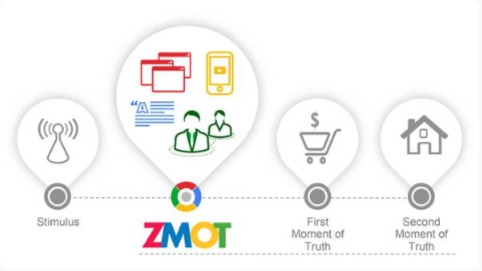
The “Zero Second of Truth” (ZMOT) is composed of all interactions a customer could have on several products more than time that collectively affect their final paying for determination.
We can utilize a identical product to acquire what I contact “micro intentions” – the more compact, many lookup intentions anyone could possibly have inside of the a lot more extensive classic consumer look for intent categories.
Why Micro Intentions
Don’t forget that the “O” in Search engine optimisation stands for “optimization.”
The act of optimizing for look for is a quest to supply the most authoritative, pertinent response to a query in the most person-welcoming manner achievable.
Micro intentions appear into enjoy in the middle of that authority/relevancy/usability triad: they hone the relevancy of written content to individual user wants to a sharper diploma than is probable with just the “big four” standard intention types.
Successful micro intent lookups can include up to major victories more than time, much in the very same way as an Web optimization skilled would perform to maximize authority by obtaining better-specific back links or increasing usability by creating incremental tweaks to web site pace.
The place Micro Intentions Are Handy
Admittedly, the usefulness of micro intentions is bigger for some of the major four intentions than many others.
Ad
Go on Reading through Beneath
For navigational and regional person intent, the amount of micro intentions matches the range of queries.
The micro intent is inherent in the query itself.
Somebody hunting “Microsoft website” evidently wishes to go to microsoft.com, while the individual seeking “pizza north New Jersey” is looking for out the most effective pizza that exists on this world, definitely.
My micro intentions thought is most practical for informational and transactional queries, so let us see what this seems to be like in individuals groups.
Some Proposed Micro Intentions
Exploration knowledge on what these micro intentions are does not nevertheless exist, to my information.
On the other hand, we can make some realistic suppositions for the informational and transactional categories.
Informational Micro Intentions
I’ll get started off with the tweet by Mordy Oberstein that motivated this post:
Something I have been wondering about.
“We” compose items to “advise” – you know “informational intent”
I dislike that expression.
I imagine we should really write to teach – academic intent.
Diff? Of course!
Just one is focused on the written content the other on how the reader will assimilate that facts! pic.twitter.com/SzXsJ4c09P
— Mordy Oberstein (@MordyOberstein) December 17, 2020
Ad
Go on Looking through Under
I disagree with Mordy a little.
I really don’t believe educational replaces informational intent alternatively, it’s a micro intent of the informational intent category.
Academic articles is just 1 type, as well, whilst it’s most likely the most significant subset of that class.
So how is academic written content a much more specific kind of informational content material?
I consider educational information is that which goes into terrific element on a subject. It satisfies the consumer whose wish is for far more than a rapid solution or a distinct reality.
Educational content is made for the consumer who wishes to broaden their expertise on a subject matter to occur absent knowing a good offer far more about it than in advance of they entered their query. It is, as a result, usually extended than most other sorts of informational content.
What are some other attainable micro intentions less than the informational group?
- Factual: The person desires to master about or confirm a distinct truth.
- Tutorial: The user wishes to know how to do anything.
- Expansional: The consumer wants associated topics or locations of enlargement on a base topic.
- Aggregational: The consumer needs to see a range of thoughts or thoughts about a matter.
Ad
Continue Examining Beneath
Can you see that each individual of these calls out for a certain form of written content?
That is important context that “informational” on your own does not give you.
To turn into the most pertinent respond to for precise teams of consumers, you need to feel further than the big 4 types.
Transactional Micro Intentions
Many transactional queries are self-contained micro intentions, similar to how nearby and navigational intent queries perform.
That is, they incorporate the micro intent within just themselves. An case in point would be “buy Nikon d5600 digital camera.”
But there are correct micro intentions for significantly less precise transactional queries.
Listed here are a handful of examples:
Categorical
The consumer wishes to acquire a variety of matter but does not automatically care which of that variety they will invest in.
Consumers just want to see a display screen of alternatives and will make their decision from there.
This could possibly look like an informational query, but it’s not (for lookup uses) simply because this person is completely ready to purchase.
In search of out more info just before acquiring is not their prime priority.
Advertisement
Proceed Reading Under
Locational
This is an fantastic illustration of how the large 4 intentions can bleed about into each and every other.
This consumer is prepared to obtain and just would like to know the place to purchase it.
Despite the fact that the “where” does not have to be a physical locale, there are features of informational and regional intent at perform.
For this micro intent, you want to be the greatest choice in just about every doable way.
Generic
This person does not treatment what model they buy they just want to invest in the point they will need.
Details on a landing web page for this micro intent requires to go past the makes available to concentrate on other differentiating factors (value, characteristics, and many others.).
Micro Intentions & Material Strategy
The principle of micro intentions is most beneficial for Search engine optimisation gurus and articles strategists looking to enhance traffic and site earnings by growing the assortment of queries for which they rank.
At a certain level, following optimizing for all of the large volume head terms for your industry, these progress can only occur by digging deeper into lengthy-tail searches.
Advertisement
Continue on Examining Down below
This is in which planning content material for micro intentions is possible to create greater benefits than basically relying on the conventional major four intentions.
Keep in mind that Google is actively in search of to enhance its potential to match user queries with the material that most exactly matches their intent. And with BERT-design technological innovation, it is really probably they are performing that at a level substantially far more granular than the significant four.
That suggests there is significant traffic up for grabs to the internet sites that can create the most information aimed at micro intentions.
How do you discern what micro-intentional categories folks are seeking for in your topic areas?
A single fantastic useful resource, at the very least for informational queries, is Google’s ‘People Also Ask.’ The certain questions people today request can be clues to micro intentions.
Yet another could be Google Issue Hub (just opened to US publishers as I produce this post).
Listening to your prospects, conversing to your gross sales and customer support reps, and examining your internal web site research analytics might also give practical clues to micro intentions in your marketplace.
Advertisement
Keep on Looking at Down below
Additional Resources:
Image Credits
Screenshot taken by writer, January 2021